

 Sometimes history changes in an instant. For Mammoth Spring, Arkansas, that moment came when Napoleon Hill, a wealthy investor from Memphis, Tennessee, stepped off a train for a breath of fresh air. On his way to Kansas City, Missouri, Hill’s feet touched the platform of a brand-new railroad depot in a quiet Ozark community. What he saw would shape the town’s future.
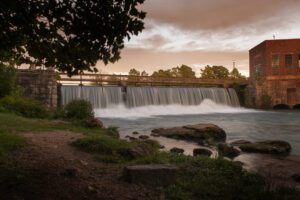
Hill was immediately captivated—not just by the powerful spring that gushes from the earth, but by the promise of the land and the people around it. His confidence in the area ran so deep that he poured his resources into the community. One of his most significant contributions was the creation of Spring Lake and the dam that feeds it—efforts that paved the way for what would become the Mammoth Spring National Fish Hatchery.
Before the hatchery was a federal facility, Hill himself owned a private ten-acre hatchery on the site. Local lore says he donated it, along with the valuable water rights, to the U.S. Fish and Wildlife Service with one condition: if the hatchery ever ceased federal operations, the land and water rights would return to the Hill family.
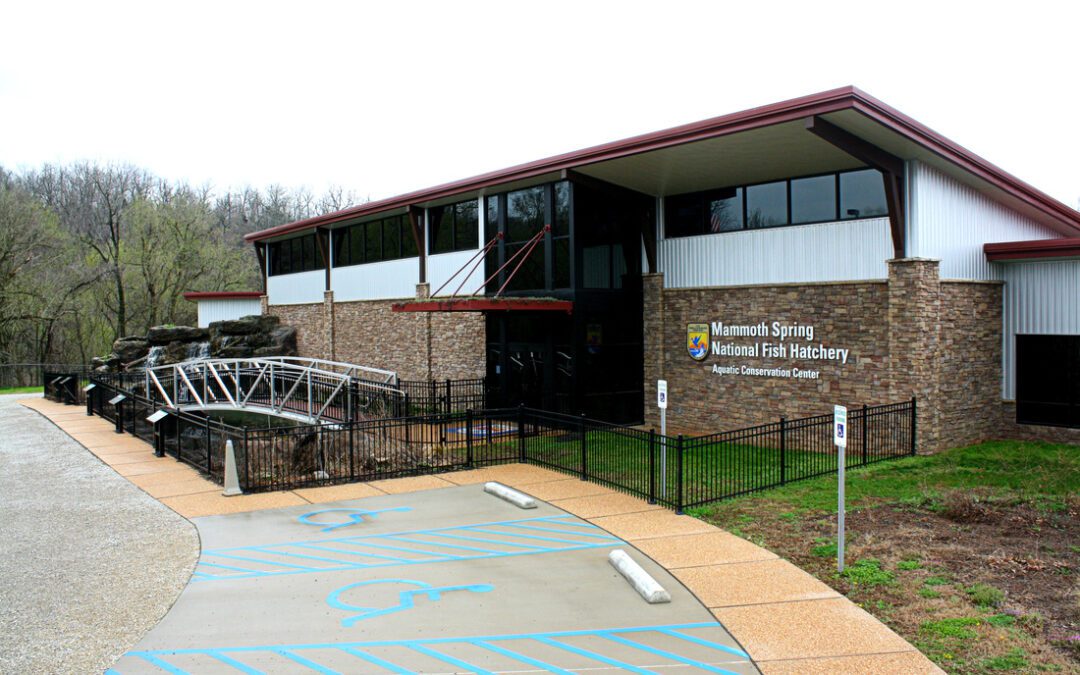
In 1903, the Mammoth Spring National Fish Hatchery officially opened with just a few modest buildings and a farm pond program. By the 1970s, the hatchery shifted focus from farm ponds to boosting native and recreational fish populations. Conveniently located next to the railroad, the hatchery used a specialized fish transport boxcar to distribute fish to waterways all along the railway lines—a strategic location envisioned from the very beginning.
Today, the hatchery remains a vital part of the community, producing fish and aquatic species for recreational use and working to restore threatened and endangered populations. Visitors can tour the facilities, explore exhibits, and learn about its century-long impact on conservation and the region’s economy.
The hatchery is also part of a larger complex that includes educational and environmentally conscious facilities, continuing its legacy of stewardship.
A single step onto a train platform in Mammoth Spring set this story in motion over a century ago. Today, visitors can still feel the ripples of Napoleon Hill’s vision in the waters of Spring Lake and the thriving hatchery it inspired.
For more information about the hatchery, head to https://www.fws.gov/fish-hatchery/mammoth-spring
#MammothSpring #ArkansasHistory #FishHatchery #ConservationHeritage #OzarkAdventures

Karin Huffman is an Independence County native who graduated from Cushman High School in 1996. Traveling throughout the state is one of her passions, along with writing about her adventures.
Taking over as travel writer for the Ozark Gateway Region is a dream come true for Huffman who lives in the region with her two daughters, Grace and Stella.
As a family, they enjoy canoeing the Poke Bayou, Salado Creek and the many waterways along the White River in Independence County. Camping and hiking throughout the region is a must for them in the spring and fall as well.
Huffman is an avid nature photographer who will do just about anything to find the perfect waterfall shot, and has visited many in the great state. From Twin Falls and the Richland Creek area in Northwest Arkansas to little known places off the beaten path, waterfalls will be found.
Huffman has been a travel writer for the Eye on Independence Magazine as well as a staff writer for the Batesville Guard, and is looking forward to devoting her time to traveling throughout the eight county region that the Ozark Gateway offers.
If you would like to contact Huffman about an adventure or would like to know how to get more information out about your area, contact her at 870-307-5473, karinhuffman78@gmail.com or karinozarkgateway@sbcglobal.net.